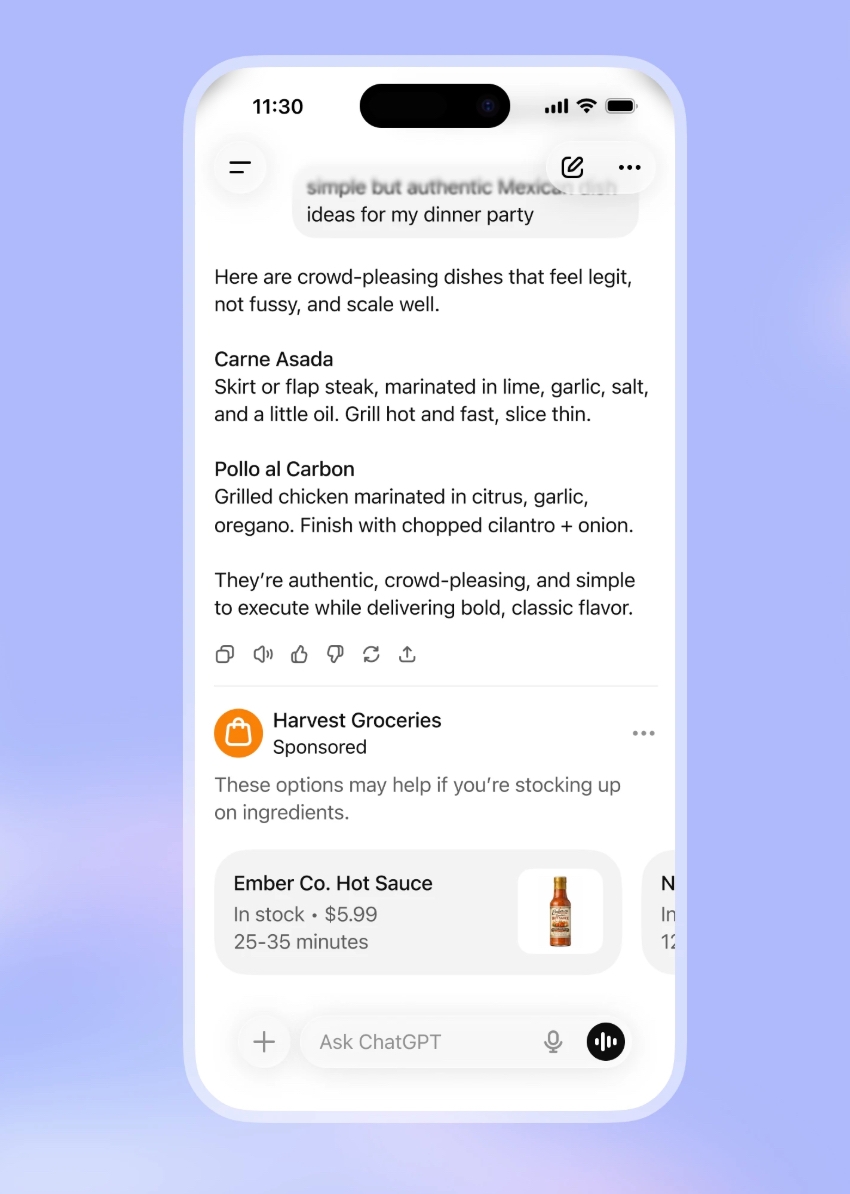
According to ChatGPT, these ads will appear only when relevant and will be placed below responses and separate from the answer, positioning them as a helpful add-on to the experience, not the force shaping the conversation.
Brands that use broad messaging, loosely defined audiences or heavy frequency to perform may find this environment challenging. ChatGPT will reward specificity over scale and usefulness over visibility. That shift may feel uncomfortable, but it reflects how people already make decisions when the stakes are high.
Why ChatGPT Matters So Much for Home and Building Brands
The home and building category has always been driven by long consideration cycles and complex decision-making. Purchases are rarely impulsive and are often influenced by multiple stakeholders, each weighing factors such as performance, durability, compliance and long-term risk.
ChatGPT has the potential to compress that fragmented journey into a single conversational experience. Instead of encountering a generic message, a homeowner, architect or facilities manager may engage with a brand while asking questions such as which materials perform best in high-moisture environments, what products hold up in high-traffic restrooms, or how to balance cost, performance and code requirements on a project.
In these moments, brand familiarity matters far less than credibility. Being “known” is no longer enough. Brands need to be right for the application and detailed in the guidance they provide.
3 Strategic Shifts for Home and Building Marketers
1. From Keywords to Real-World Questions: SEO taught marketers to leverage keywords, but ChatGPT shifts the focus to real questions tied to actual outcomes. In home and building, those questions are rarely abstract. They’re application-specific, environment-specific and consequence-driven. Buyers aren’t just asking what product to use, they’re also asking what materials will hold up in a wet area, meet code requirements, last in a high-traffic space or avoid costly callbacks.
Brands that don’t clearly understand these decision moments — and the trade-offs behind them — will find that a conversational environment doesn’t mask uncertainty. It exposes it.
2. Conversation Rewards Substance Over Spin: In a conversational setting, creative can’t rely on positioning alone. Home and building brands must be able to clearly explain performance, justify recommendations and withstand direct comparison to alternatives. That requires tight alignment between brand messaging, product differentiators and sales guidance.
For brands built on real performance and proof, this environment is an advantage. For others, it’s a stress test.
3. Measuring What Moves Decisions Forward: ChatGPT won’t reward brands with easy metrics, but it will surface more meaningful signals, including how quickly and confidently buyers move forward. Earlier specification, fewer stalled decisions and more productive sales conversations become the real indicators of performance.
For home and building marketers, where the goal is often to influence decisions upstream rather than drive immediate conversions, this shift moves measurement closer to the outcomes that truly matter.
Why This Moment Matters
The most important question is not whether ChatGPT advertising belongs in the media plan. It is whether your brand is prepared to show up in a trusted conversation and genuinely help someone make a decision.
Brands that are ready for that responsibility will find that ChatGPT amplifies their strengths. Brands that are not will discover that the platform does not create new problems so much as reveal existing ones. That reality, more than any individual ad format, is what makes this moment worth paying attention to.
As discovery continues to evolve, so will demand. Explore what home and building marketers should be factoring into their 2026 strategies, informed by homebuilding and renovation forecasts.