Public Relations

Written By
Gina Page
Public Relations Associate Director
At Bobrick’s recent showroom opening in New York City, I found myself looking at a product I’d seen countless times before with entirely new eyes.
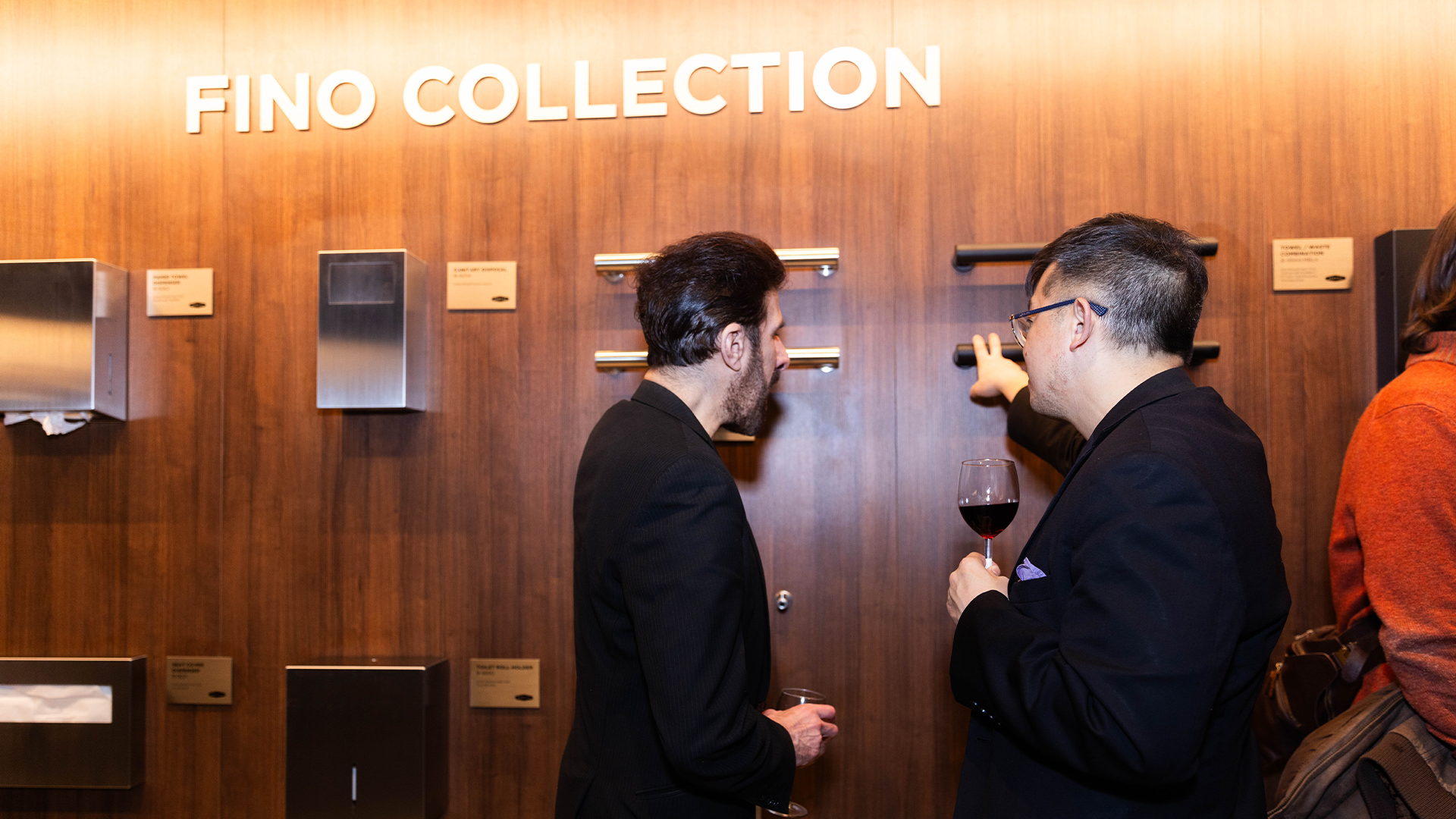
Bobrick Washroom Equipment, Inc., a global leader in restroom accessories, partitions and accommodation solutions, had staged a series of restroom partition and hardware displays, allowing visitors to experience the products in a setting that closely mirrored their intended application. As I walked through the space, I noticed a familiar occupancy indicator on a stall door. Red signaled occupied and vacant appeared white.
My immediate thought was: Shouldn’t vacant be green?
What I learned is something I didn’t pick up from a product sheet or digital campaign alone. For people with certain forms of color blindness, green isn’t always distinguishable. White is. The design wasn’t an aesthetic decision — it was an accessibility decision.
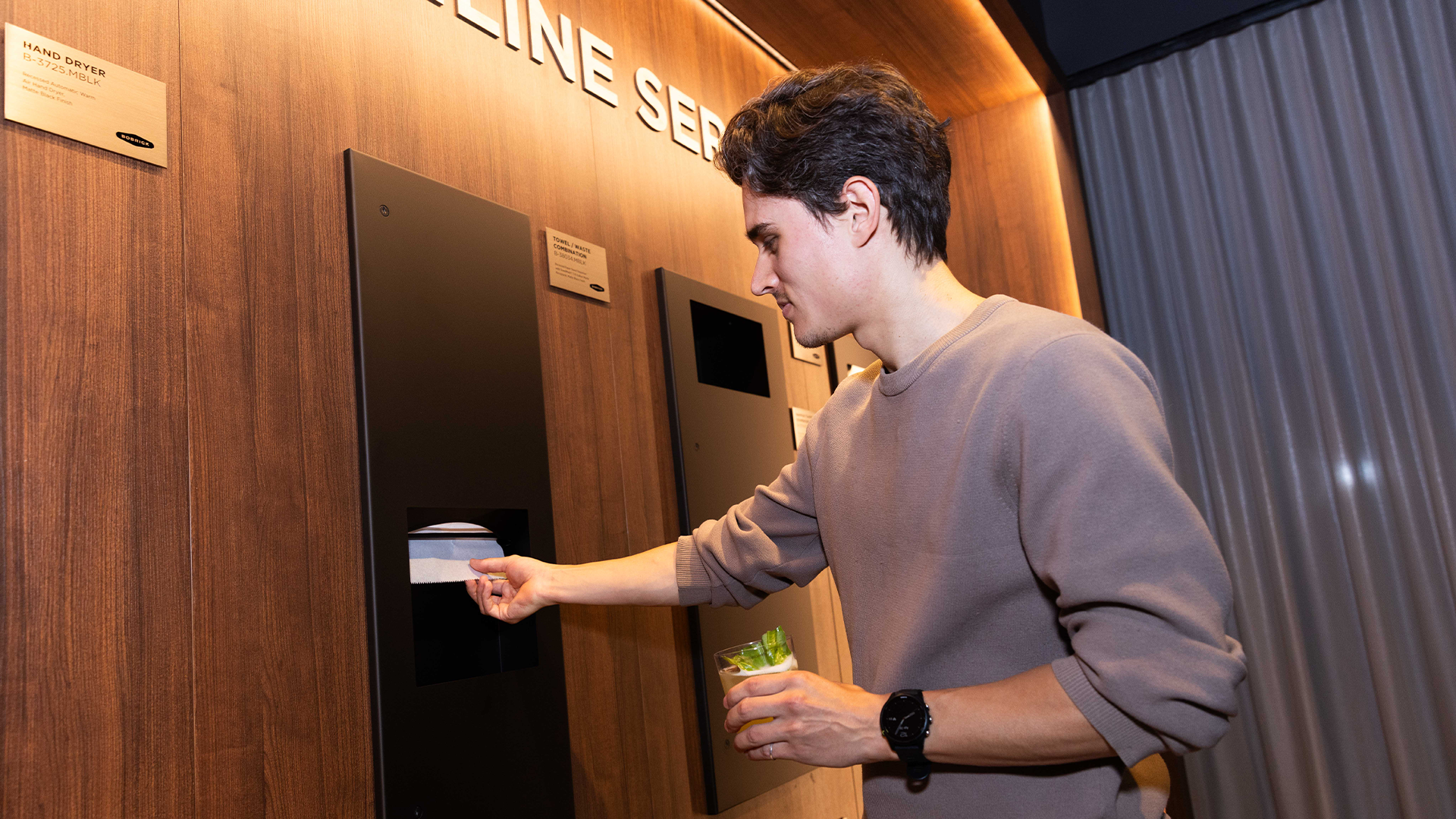
As part of the Wray Ward PR team that helped develop and launch Bobrick’s showroom experience, I’d worked closely with the brand and had a strong understanding of its product portfolio. But standing in the showroom — seeing the product in context and hearing the reasoning behind it — allowed the purposeful design and the Bobrick brand as a whole to come to life for me in a way it hadn’t before. The ability to experience a product firsthand, rather than simply viewing it on a screen, can be incredibly powerful in helping that connection take shape.
Why go physical in a digital-first world?
That moment with the occupancy indicator reinforced that even in an era where every brand is investing heavily in digital channels, providing immersive brand experiences in the physical world can facilitate a different depth of audience connection and product awareness.
Sure, digital marketing offers unprecedented reach, precise targeting and measurable results. But reach comes with a trade-off. The same channels that make it possible to connect with thousands of people also place your message alongside thousands of competing messages. Attention is fragmented, experiences are compressed and understanding is reduced to what can be communicated through a screen.
For brands like Bobrick, whose products are defined by their materials, finishes and specification requirements, firsthand experience can be especially valuable. Architects and designers don’t simply evaluate products based on features. They evaluate materials, craftsmanship, functionality and how a product performs within a space.
A website can communicate that information, but a showroom brings it to life.
Showing Up With Authority in a Design-Oriented City
The New York Design Center in New York City is where architects, designers and manufacturers come together to exchange ideas, discover new products and shape the future of the built environment.
As Bobrick prepared to open its showroom at the Design Center, the challenge wasn’t introducing the brand, as Bobrick already has a strong reputation for product design and quality. The opportunity was to reinforce its position as a design-forward leader and elevate perceptions beyond functionality alone.
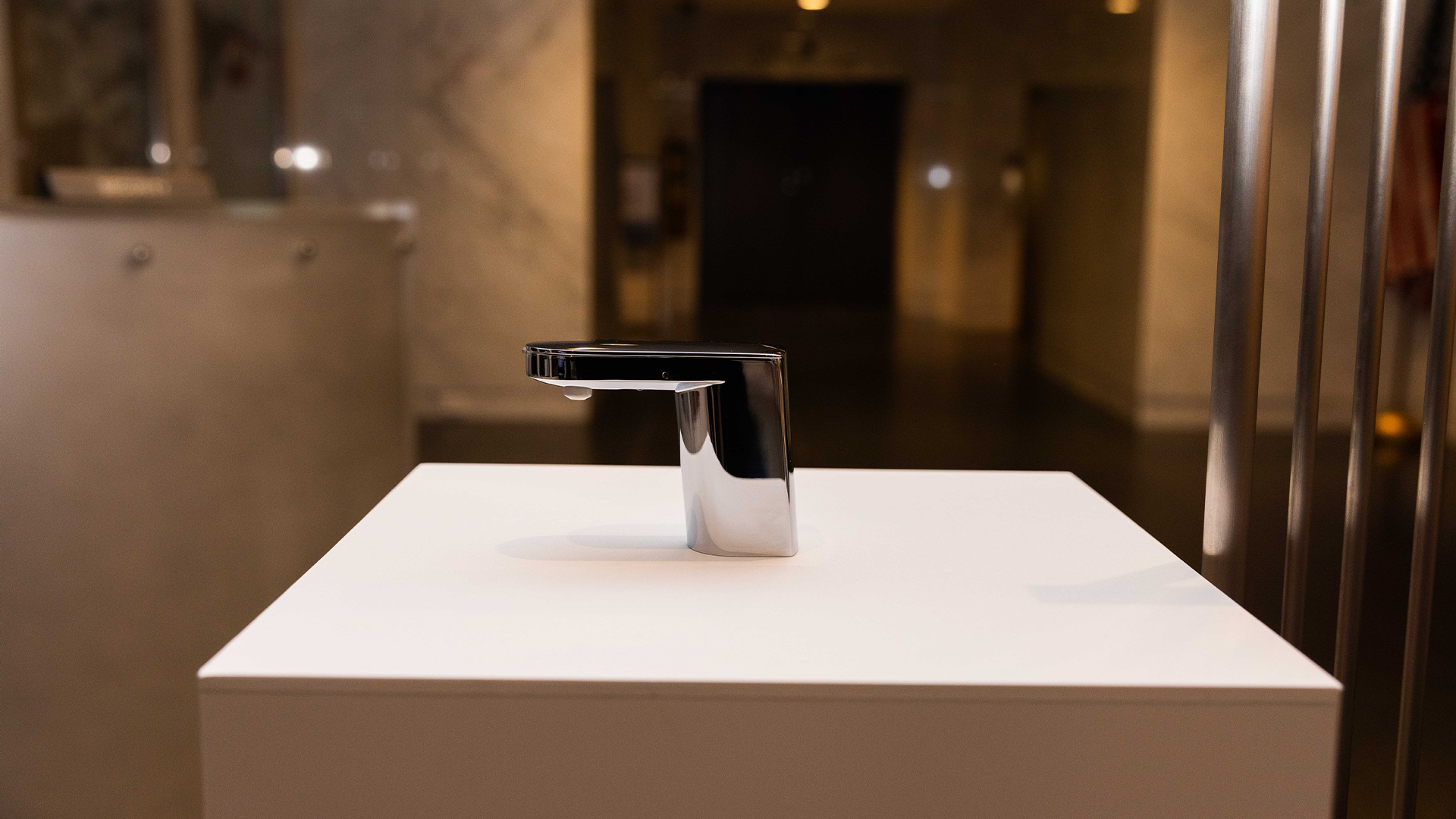
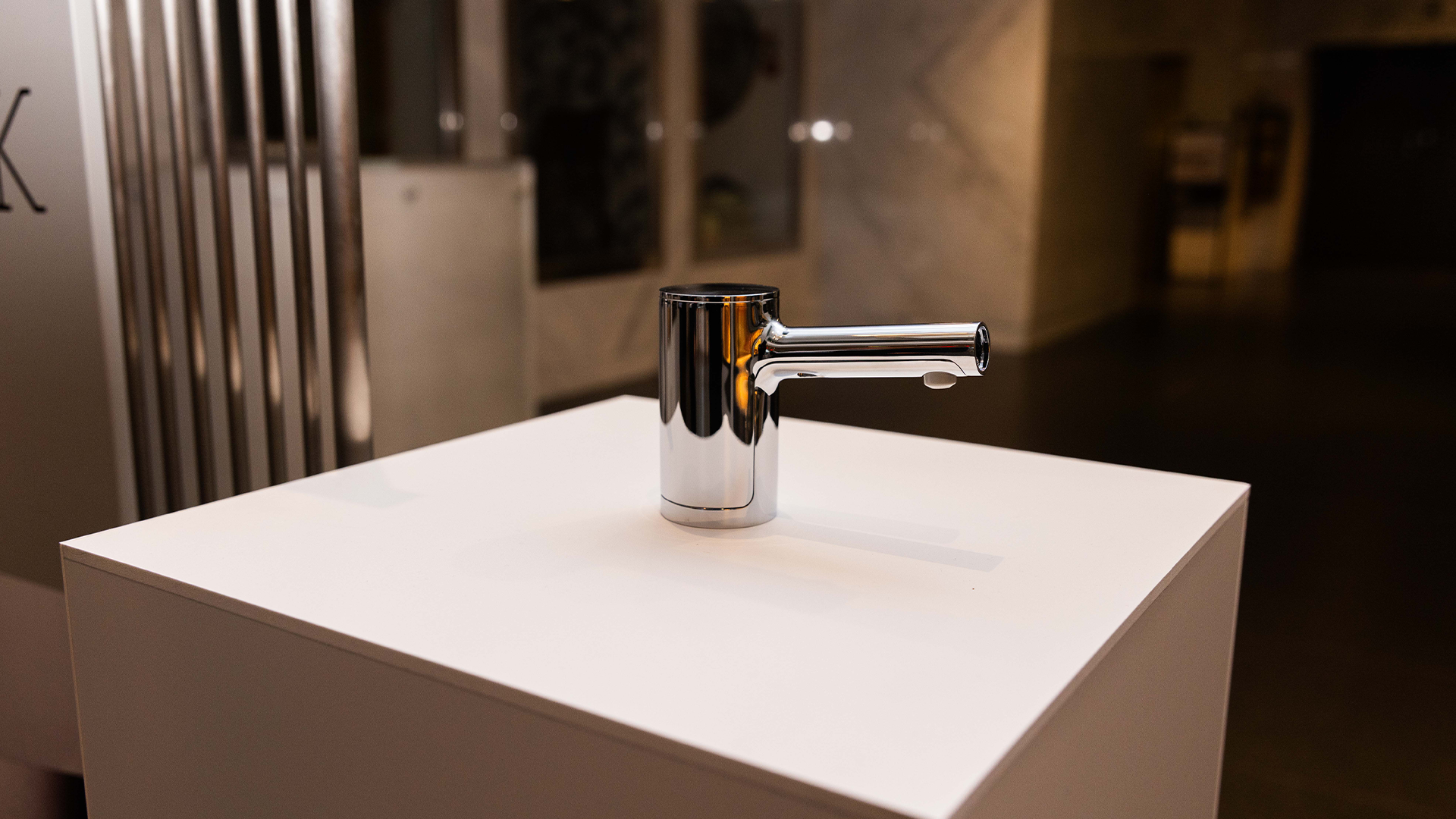
To bring that vision to life, Bobrick partnered with Gensler, a global architecture and design firm, to create a showroom experience inspired by New York City’s theater culture. Throughout the space, products are illuminated as though they are on stage, transforming everyday restroom solutions into design focal points.
Our team approached the opening as more than a product showcase; it needed to feel like a statement. The creative concepts explored a range of possibilities, but one rose to the top almost immediately: The Art of Bobrick.
The idea was simple but powerful. Rather than treating the space as a traditional showroom, we would frame it as a gallery experience, inviting visitors to see familiar products through a new lens.
The Art of Bobrick: When the Product Becomes the Exhibit
The showroom itself provided the perfect backdrop for the launch. Building on Gensler’s gallery design approach, we wanted every event touchpoint to reinforce the same experience. Invitations were designed more like gallery announcements than event promotions. Signage borrowed cues from museum wayfinding. Decorative elements were intentionally restrained, allowing the products and the space itself to remain the focal point.
The result was a subtle but important repositioning. Visitors weren’t simply evaluating restroom products. They were examining design solutions, craftsmanship and innovation. The products hadn’t changed, but the context around them had.
Thoughtful brand experiences shouldn’t just communicate information; they should influence perception.