Creative
Television and Video

Written By
Matt Wadley
Content Marketing Associate Director
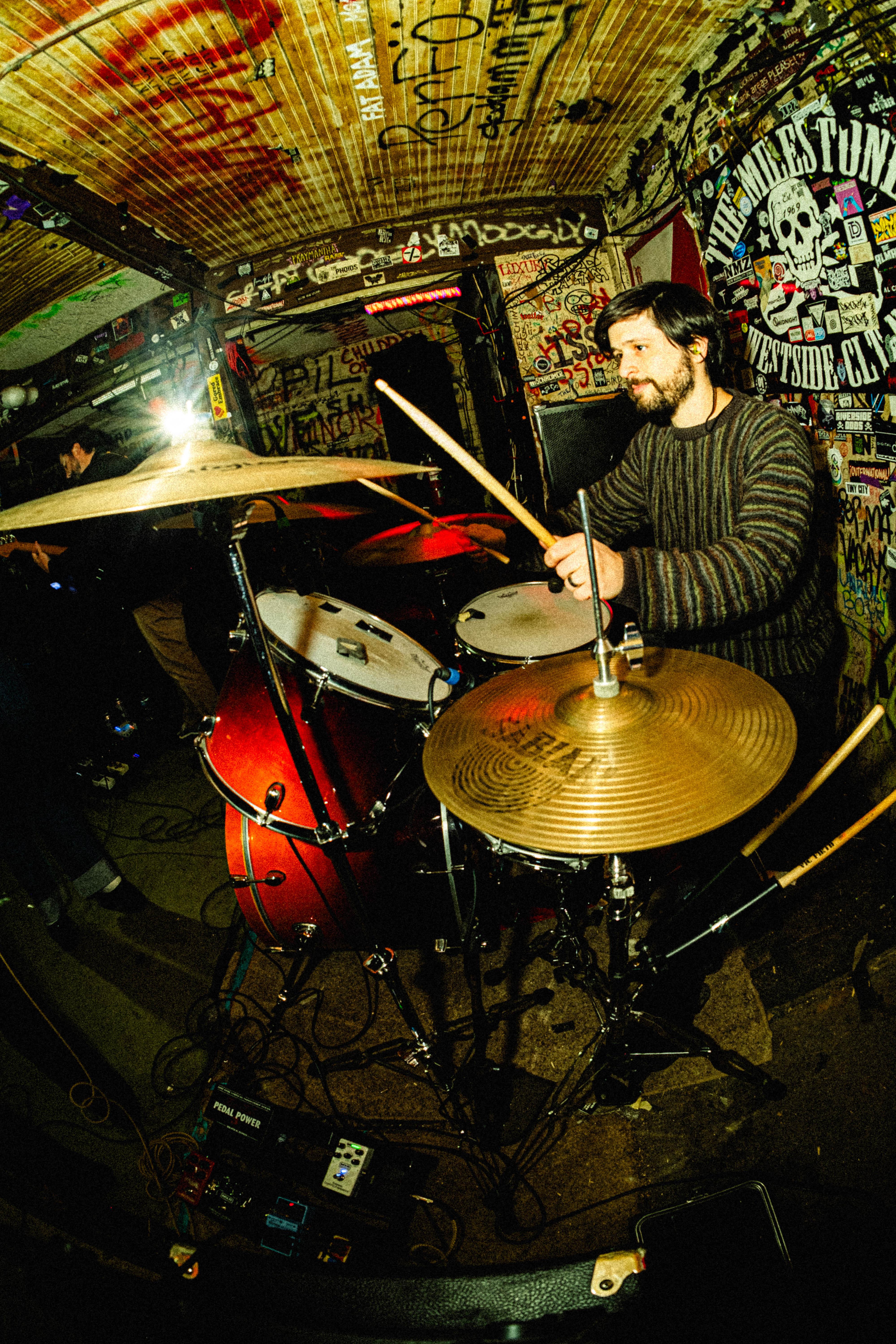
For Garrett Herzfeld, rhythm is more than music.
Whether he’s behind a drum kit or orchestrating postproduction for a client video, Garrett’s role is remarkably similar: creating the structure that allows everyone else to shine. And after playing in roughly a dozen bands over the years, pace and timing have become second nature.
That same mindset helps Garrett thrive in his role as postproduction manager at Wray Ward. Behind the scenes, he helps guide projects from rough cut to final delivery, coordinating schedules, managing production logistics and keeping creative teams aligned every step of the way. Like the drummer in a band, he’s rarely the center of attention, but without him, the work doesn’t stay on time.
I sat down with Garrett to talk about his musical journey, how learning complex songs mirrors managing complex productions and why some of the most important creative work happens behind the scenes.
How did you first get into music, and what drew you to percussion?
Garrett: It started back in middle school. When everyone was picking instruments, I never considered anything other than percussion. I spent those early years learning the mechanics of the snare drum, xylophone, timpani and other instruments before eventually taking those skills behind a full drum kit to start playing with friends in high school.
I’ve always been drawn to rhythm. There’s something about sitting behind a kit — locking into a groove and feeling everything click with the rest of the band — that makes sense to me.
You’ve played in upward of a dozen bands across different genres. What’s your process for learning an entirely new set?
Garrett: It really comes down to understanding the framework. When I join an existing project, I’ll listen to their songs over and over, mapping out the verses, choruses, transitions and dynamics until I know exactly where everything fits. Once I understand the structure, I can focus on performance rather than what’s coming next.
When I’m writing new material with a band, it’s a different process. That’s more collaborative. We’re jamming together and building that structure as we go.
Whether I’m playing pop-punk, progressive rock or metalcore, my role on the kit is always the same: keep the tempo, hold everything together and make everyone else sound better.
When did you realize drumming had prepared you for postproduction?
Garrett: The similarities became obvious pretty quickly. In postproduction, I’m doing a lot of the same structural work, just with footage, timelines and project scope instead of song sections and drum fills.
My job is to create the structure that allows everyone else to do their best work. I coordinate schedules, manage outside partners, organize production logistics and keep projects moving through revision cycles so our creative teams can stay focused on the work itself.
Whether we’re producing broadcast commercials, connected TV spots, YouTube pre-rolls or website videos, there are dozens of moving parts. My role is making sure all of those pieces stay in sync.
Drummers are often the backbone of a band rather than the person in the spotlight. Do you see a parallel with postproduction management?
Garrett: Absolutely. Drumming isn’t about being the focus of the performance. It’s about consistency, timing and knowing when to push or pull back. If I’m doing my job well on stage, people might not single me out, but they feel the difference. They notice when the transitions land, when the energy builds naturally and when everything flows together.
It’s the same in postproduction. I enjoy handling the structural work that lets everyone else shine. If the schedules line up, the revisions stay on track and the project moves smoothly from one stage to the next, most people never think about everything happening behind the scenes — and that’s exactly the point.
Whether it’s a live performance or a commercial production, people notice when the rhythm is off. My job is making sure it stays on.
The Catalysts Behind the Creative Momentum
Every great production depends on the people who keep the creative process moving. From concept to final cut, Wray Ward’s Motion team brings together the craft, collaboration and attention to detail needed to turn big ideas into engaging stories.
Meet Kyra Arendt and learn how her passion for filmmaking helps shape the work happening behind the camera.