Social Media
Digital Platforms
Influencer Marketing

If you love baseball, you love Opening Day. Ever since I was a kid, my family would circle the Cincinnati Reds first home game on the calendar, counting down the days in anticipation of a new season. Back then, just 20 or so years ago, staying connected to your team during the long, cold offseason meant maybe catching an update via the sports section or going down the rabbit hole of fan-led chat rooms.
Today, teams don’t disappear in the offseason. Through social media, they’re with fans 24/7, building anticipation, telling stories and creating a sense of community that extends far beyond the ballpark.
As a social media associate director at Wray Ward, I spend my days helping brands find that same sweet spot — staying connected and engaged with their fans in ways that feel authentic, not just promotional. Whether it’s a home improvement brand or a major league franchise, the goal is the same: turn a passive audience into a loyal community.
This year, I carried on the tradition and made it back to Great American Ball Park for the Reds’ Opening Day on March 26. Even though the Red Sox took the game 3-0, the energy in Cincinnati was electric, as it always is.
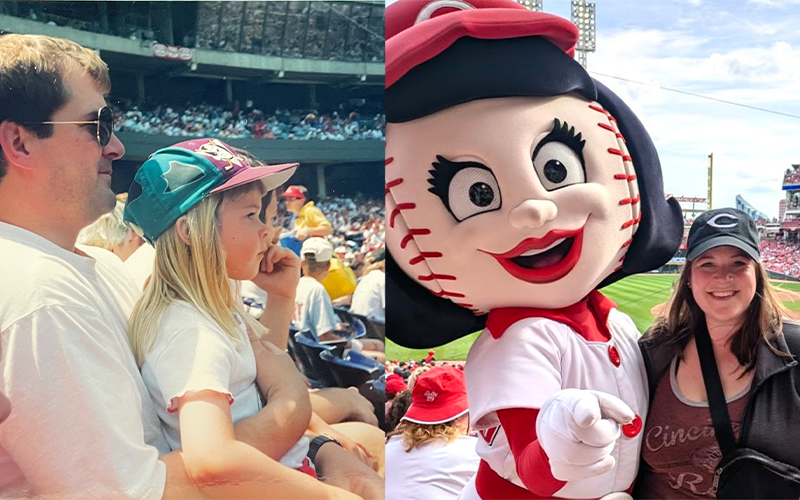
Walking through the stadium and seeing the sea of red, I couldn’t help but view it through a professional lens. The team’s TikTok and Instagram content had built the buzz all offseason, and now it manifested in tens of thousands of fans lining the streets. Every post, clip and story feeds a larger narrative engine, keeping the 162-game faithful engaged and invested all year long.
Across MLB, teams are treating social media like a 24/7 content studio, using personality, humor, behind-the-scenes access and fan-driven storytelling to keep audiences connected. The lessons here aren’t just for sports marketing, they’re a blueprint for any brand looking to transform followers into an active and engaged community.
1. Turning Moments Into Momentum
Teams like the Toronto Blue Jays have mastered the art of real-time content. When a moment happens — whether it’s a big play or a player reaction — it’s clipped, captioned and published almost instantly. What sets the Blue Jays apart is the infrastructure behind the speed. Their social team operates more like a live newsroom than a traditional marketing function, monitoring the game in real time, identifying moments with emotional or cultural potential and pushing content out within minutes. These posts are rarely overproduced. Instead, they’re optimized for immediacy, often paired with simple, witty captions that match the tone of the moment. They also understand that not every moment needs to be historic to be valuable. A glance, a celebration or a fan reaction can become content if it captures something relatable or entertaining. By consistently showing up in the moment, they train their audience to expect — and look for — their posts as part of the live experience.
Why It Works: Speed captures emotion while it’s still fresh. Fans don’t just watch the moment, they relive it and share it.
How It Builds Engagement: It turns passive viewers into active participants, extending the life of a single moment across platforms.
What Brands Can Learn: You don’t need a live sporting event to apply this. Product drops, jobsite milestones or even behind-the-scenes moments can be turned into “micro-events” if your team is set up to move quickly.
2. Making the Brand Feel Human
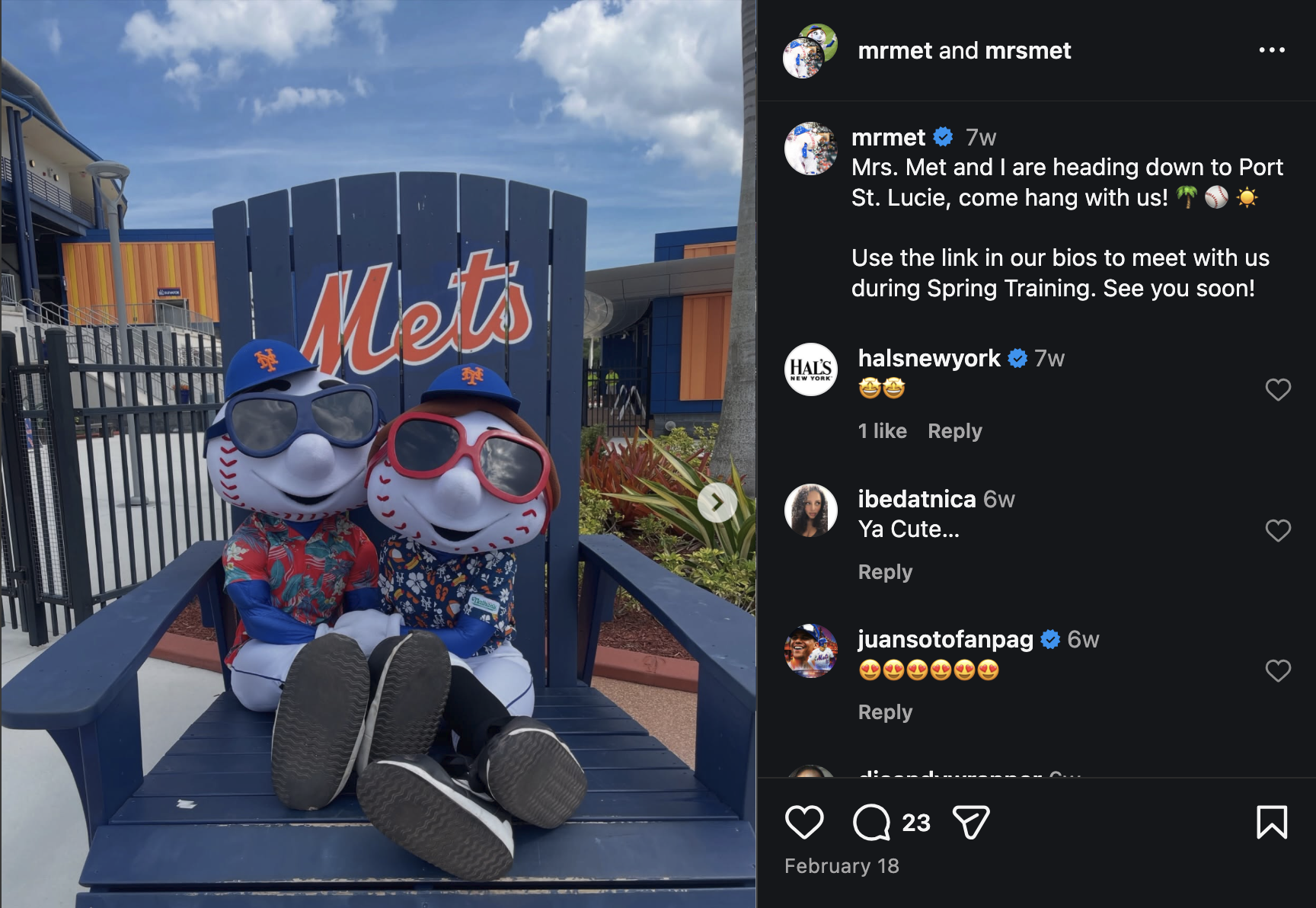
The New York Mets and Philadelphia Phillies lean heavily on their team mascots — Mr. Met and the Phillie Phanatic, respectively — not as side characters, but as full-fledged content creators. On social, both mascots operate almost like independent influencers with distinct personalities, recurring bits and platform-native humor. Mr. Met shows up in short-form skits, reaction videos and trend-driven content that mirrors how everyday users post: dry humor, quick cuts and cultural references.
Meanwhile, the Phillie Phanatic leans into chaos and spectacle: trolling opponents, interacting with fans and celebrities, and creating highly visual, shareable moments that regularly break out beyond the team’s core audience.
Why It Works: People connect with personalities, not logos.
How It Builds Engagement: Humor, relatability and recurring characters create familiarity — and familiarity drives interaction.
What Brands Can Learn: Every brand has a voice, but few develop a personality. Whether it’s a spokesperson, a project manager or even a consistent tone, giving your brand a human face makes content more engaging and more shareable.
3. Extending the Experience Beyond the Product
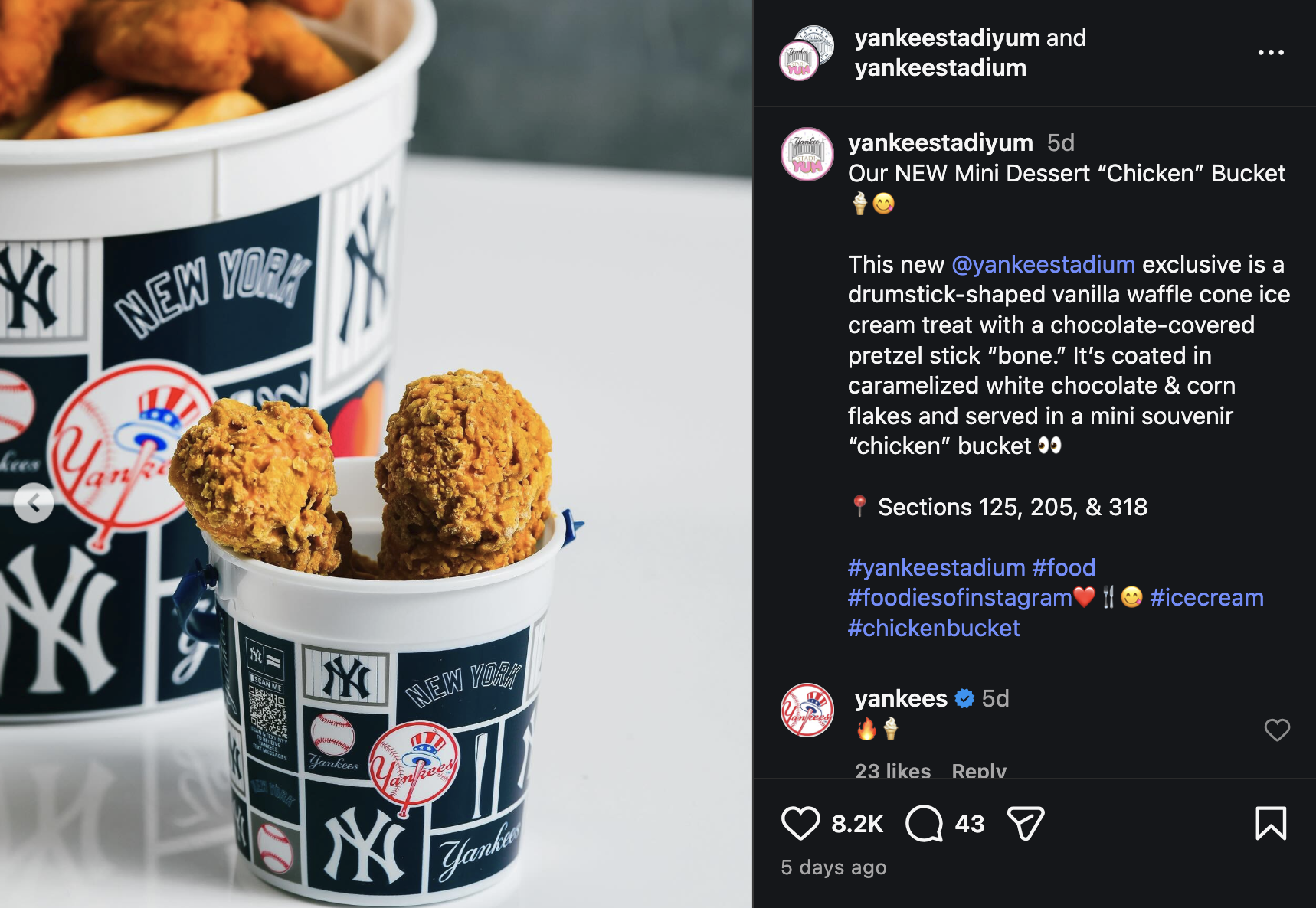
The New York Yankees proved that not all content has to be about the game when a new concession item — ice cream disguised as fried chicken and served in a novelty bucket — took off across social media. What started as an in-stadium food offering quickly became a viral moment, with fans posting reactions, debating it online and amplifying it far beyond the ballpark. The team leaned into the conversation, extending the life of the moment and turning a simple concession into a cultural touchpoint.
Why It Works: It taps into culture, not just category.
How It Builds Engagement: Fans who may not care about the score still have a reason to interact, comment and share.
What Brands Can Learn: You don’t have to talk about your product all the time. For home and building brands, this could mean spotlighting design trends, jobsite culture or even the personalities behind the work.
4. Choosing Authenticity Over Production Value
Teams like the Seattle Mariners are leaning heavily into behind-the-scenes content, from locker rooms and travel days to candid player interactions that fans wouldn’t normally see. Rather than focusing solely on game highlights, the Mariners showcase the human side of the team, from humor-driven skits to players’ off-field personalities and interactions with fans.
Why It Works: People crave authenticity. Behind-the-scenes content offers an unpolished, relatable view that feels exclusive — like getting a backstage pass to the team. It strengthens emotional connection, because followers feel like insiders rather than spectators.
How It Builds Engagement: Fans get access they can’t find anywhere else, which keeps them coming back.
What Brands Can Learn: You don’t need flashy production to create compelling content. For home and building brands, this could mean showcasing project setups, team brainstorming sessions or the step-by-step process of a renovation. Authentic, candid storytelling humanizes the brand and keeps your audience coming back for more.
5. Celebrating Local Culture and Fans
Last but certainly not least in this fan’s heart, the Cincinnati Reds use social media to spotlight both their city and their fan base, creating content that feels hyper-local and community-driven. By highlighting Opening Day traditions outside Great American Ball Park that tap into the storied history of the team and showcase the fan community, the Reds immerse their social media followers with meaningful content that reflects collective pride in the city and the team.
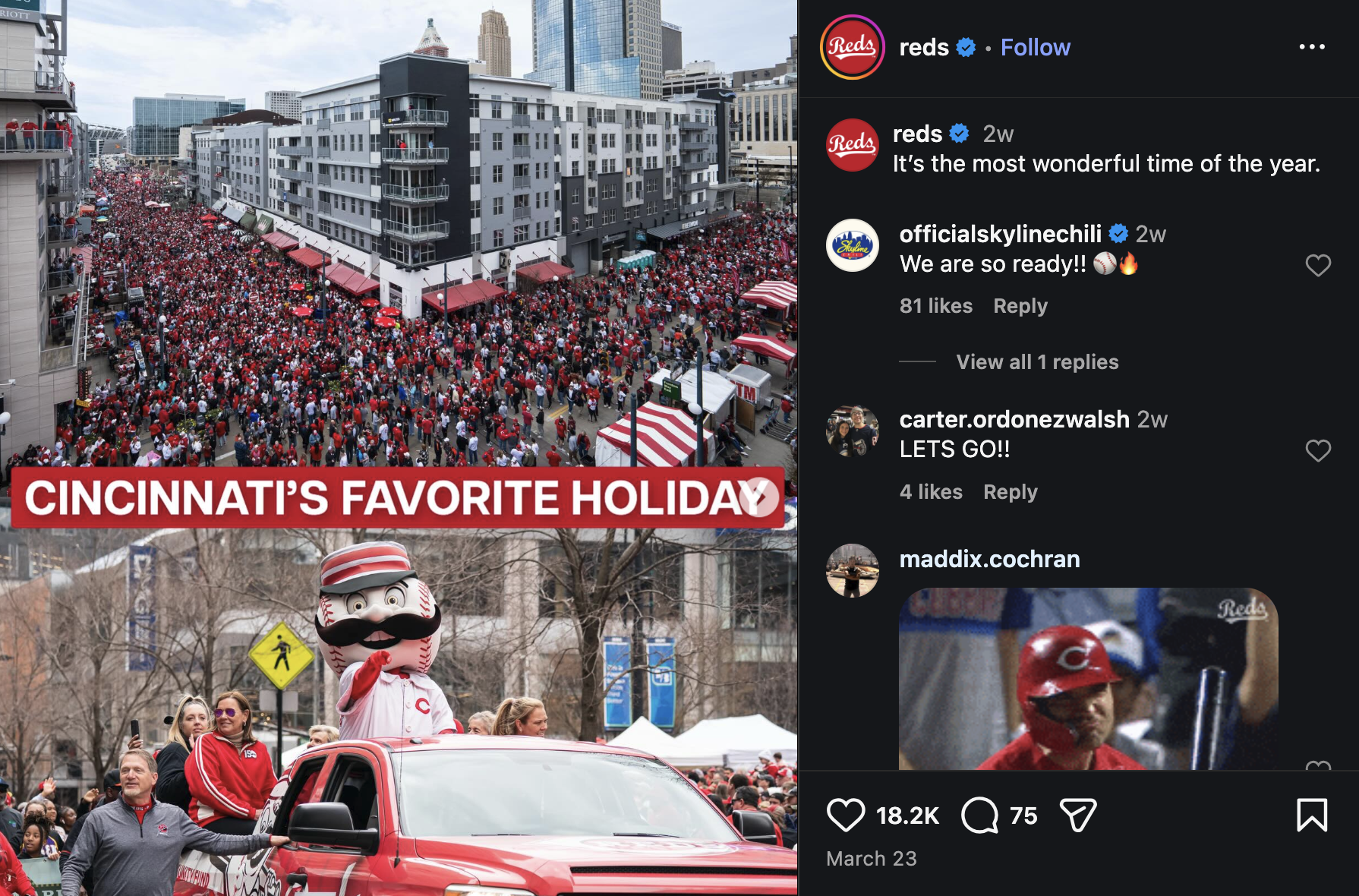
Why It Works: When fans see themselves and the things they care about come to life in the content, it strengthens loyalty and encourages sharing. By elevating genuine moments alongside team highlights, the Reds make social media a space where Reds Country (the fanbase) — not just the players — drives the story.
How It Builds Engagement: Fans feel like they’re part of something bigger, whether they’re in the stadium or not.
What Brands Can Learn: Local and community-driven storytelling can be as powerful as high-production content. For home and building brands, this could mean showcasing neighborhood projects, client stories or employee spotlights — content that resonates because it reflects the audience’s world, not just the brand’s.
The Content Engine Mindset: Hitting Social Out of the Park
The teams winning on social are the ones showing up consistently, embracing personality and creating content that feels native to how people actually consume media today.
What MLB teams understand is this: Social media isn’t a distribution channel. It’s a participation channel. The goal isn’t to push content out. It’s to create something people want to engage with, react to and share. And that shift, from broadcasting to building community, is where the real value is created.
Whether you are building a fanbase for a major league team or a community around a home improvement brand, the core principle remains the same: the human element is irreplaceable. In a world increasingly saturated with automated messaging, the brands that win will be those that double down on real moments, authentic personalities and genuine connection.
Ready to ensure your brand stays human in a digital world? Read our take on navigating the zombie content apocalypse and learn how to maintain your brand’s humanity amid the rise of AI.